Posted on April 1, 2026 View all news
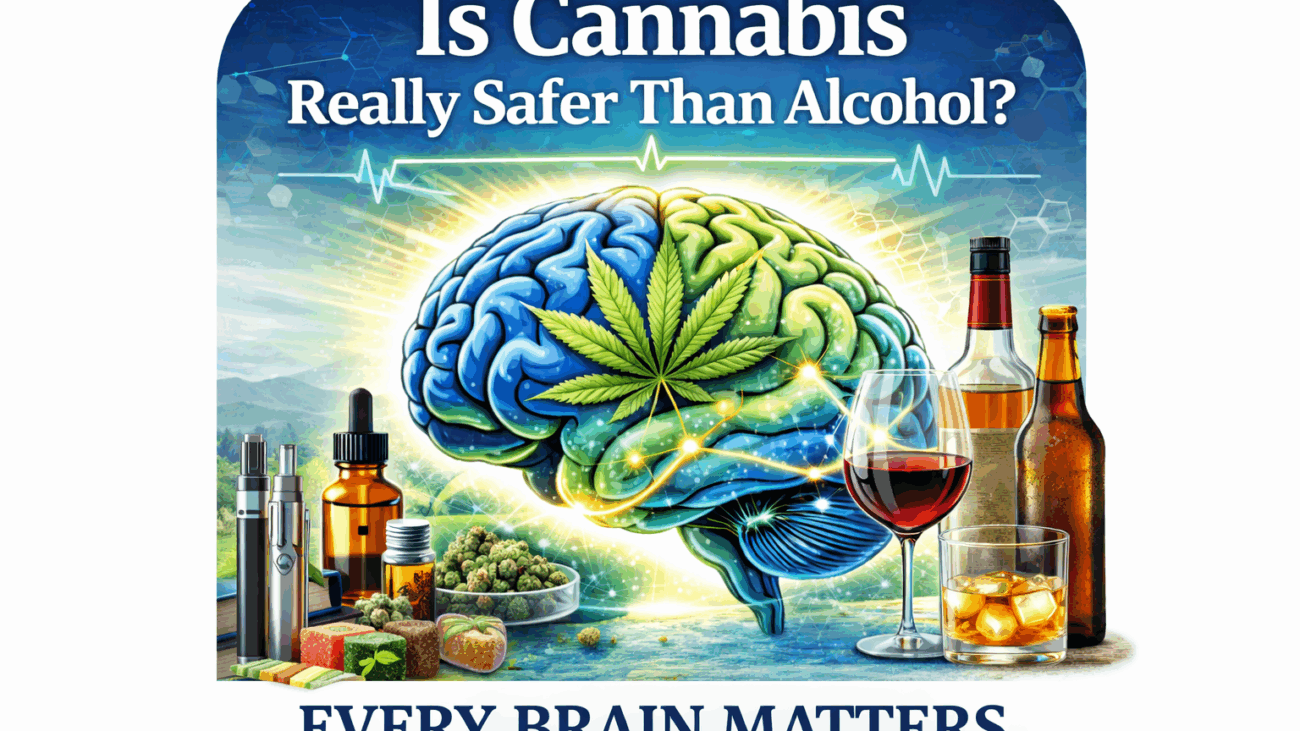
For years, a simple argument has driven marijuana legalization efforts: cannabis is safer than alcohol. At first glance, the reasoning seems straightforward—alcohol is legal and harmful, so if cannabis is less harmful, shouldn’t it be treated the same way?
But that logic doesn’t hold up under closer scrutiny.
Even if cannabis were safer, that would not make it safe. Both alcohol and marijuana affect the central nervous system, altering memory, judgment, coordination, and reaction time. Both interact with the brain’s reward system and can contribute to dependence and mental health challenges, including anxiety and depression. “Safer” is a relative term—it compares risk, but it does not eliminate it.
The comparison becomes even more complicated when considering how both substances have evolved. Alcohol potency has remained relatively consistent over time. Cannabis, however, has changed dramatically. Today’s products often contain much higher concentrations of THC, the primary psychoactive compound, and are frequently delivered through methods like vaping that allow for rapid absorption. These changes mean cannabis can now affect the brain faster and more intensely than in the past. Regardless of how it is consumed, the result is the same: impaired brain function, with no risk-free way to be under the influence.
A Flawed Comparison from the Start
One major limitation in the “safer than alcohol” argument is the way harm is measured.
Alcohol-related deaths are systematically tracked and well documented, including deaths from liver disease, alcohol poisoning, and impaired driving. In contrast, marijuana-related deaths are not consistently recorded. Cannabis is rarely listed as a primary cause of death, even when it may contribute to fatal outcomes. It is also not routinely tested for in many death investigations or among individuals involved in violent incidents.
As a result, cannabis often appears in situations where death is attributed to other causes—such as suicide, violence, child neglect, cardiovascular events, or polysubstance overdoses—without its role being fully accounted for. This makes direct comparisons between alcohol and cannabis incomplete and potentially misleading.
Focusing solely on which substance causes more deaths also oversimplifies the issue. The broader concern is how each substance contributes to preventable harm.
Intoxication vs. Psychosis
A key difference between alcohol and cannabis lies in how they affect the brain.
Alcohol primarily causes intoxication—a temporary state of impaired coordination, slowed reaction time, and reduced judgment that resolves as the substance leaves the bloodstream. THC behaves differently. Because it is fat-soluble, it can remain in the body longer and produce effects that are less predictable and, in some cases, more prolonged.
In certain individuals, particularly with high-potency products, THC can trigger paranoia, delusions, and even psychosis—a break from reality that may persist beyond the initial period of intoxication.
This distinction is especially important when considering impaired driving. Alcohol-related impairment is well understood: slower reactions, reduced coordination, and poor decision-making. Cannabis impairment can include these effects, but may also involve distorted perception and altered reality.
Drivers under the influence of THC may misjudge speed and distance, react inappropriately to normal traffic conditions, or respond to perceived threats that do not exist. In cases involving psychosis, behavior may become unpredictable and irrational, introducing risks that extend beyond simple impairment. Compounding the issue, individuals may believe they are no longer impaired even while cognitive and perceptual effects persist.
Addiction: A Misunderstood Risk
Cannabis is often perceived as non-addictive or only mildly habit-forming. However, research suggests otherwise.
Approximately 30% of cannabis users develop Cannabis Use Disorder, compared to about 10% of alcohol users who develop Alcohol Use Disorder. While the nature of dependence may differ between substances, the risk of developing problematic use is not insignificant.
Cannabis use disorder can involve cravings, withdrawal symptoms, reduced motivation, and continued use despite negative consequences. Over time, this can affect mental health, cognitive function, and daily behavior. The perception of cannabis as low-risk may also contribute to higher rates of regular use, particularly among younger populations, increasing the likelihood of long-term effects.
Overdose: A Narrow Definition of Risk
Another common claim is that cannabis is safer because it does not cause fatal overdoses in the same way alcohol does.
It is true that alcohol poisoning directly causes thousands of deaths each year. However, defining overdose risk only in terms of immediate toxicity overlooks how substances contribute to fatal outcomes more broadly.
Cannabis is frequently present in polysubstance overdose cases. While it may not suppress breathing in the same way as opioids or alcohol, it can impair judgment, increase impulsivity, and alter perception of risk. These effects can lead individuals to combine substances in dangerous ways or misjudge dosages.
In this context, cannabis may not always be the sole cause of death, but it can play a significant role in the sequence of decisions and conditions that lead to it. Evaluating safety based only on direct toxicity misses this broader contribution to harm.
So, Is Cannabis Safer Than Alcohol?
The most accurate answer is: it depends—but not in the way the comparison is often framed.
Alcohol may pose greater immediate risks in some situations, particularly due to its direct toxicity and well-documented effects on the body. Cannabis, however, presents its own set of risks, especially in areas related to brain function, perception, and mental health.
Comparing the two as if one is simply “better” overlooks the fact that both substances impair the brain and can contribute to injury, disease, and preventable death.
A familiar pattern emerges when substances are widely adopted before their risks are fully understood. Alcohol, tobacco, and opioids were all, at different points, normalized or even promoted before the full extent of their harms became clear.
Cannabis is increasingly following a similar path, with expanding availability and changing perceptions occurring alongside a growing body of research on potential risks.
Final Thought
The question is often framed as a comparison: which substance is safer.
But a more meaningful question is whether expanding access to another impairing substance reduces harm—or adds to it.
Alcohol already contributes to significant levels of addiction, disease, impaired driving, and preventable death. Introducing or normalizing another substance with its own set of risks does not eliminate those harms; it will compound them.
From a public health perspective, the focus shifts away from choosing between substances and toward reducing overall harm—recognizing that “less harmful” is not the same as safe, and that prevention remains more effective than comparison.
The real question is this:
If one widely accepted drug is already causing so much damage, why would we choose to commercialize another—adding more risk, more harm, and more preventable tragedy?
At Every Brain Matters, we believe the goal should be clear: not to expand harm—but to reduce it.
Aubree Adams, Director
Every Brain Matters (EBM) is a nonprofit that was founded by Parents Opposed to Pot. We raise awareness about the dangers of THC through education, advocacy, and compassionate support to protect the health and safety of future generations and to ensure that no one faces this struggle alone.
Please subscribe to our newsletter and make a monthly donation.