Posted on May 31, 2026 View all news
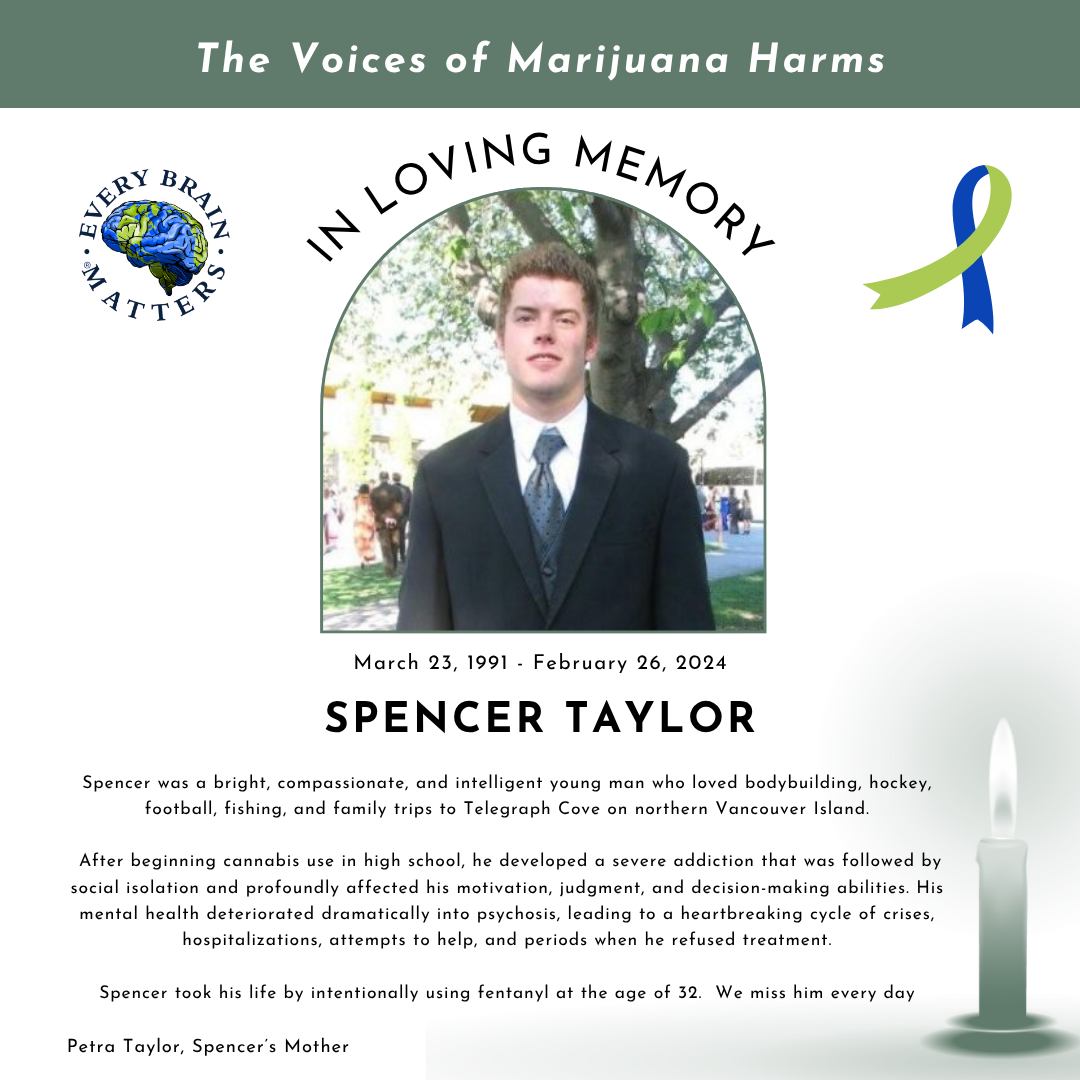
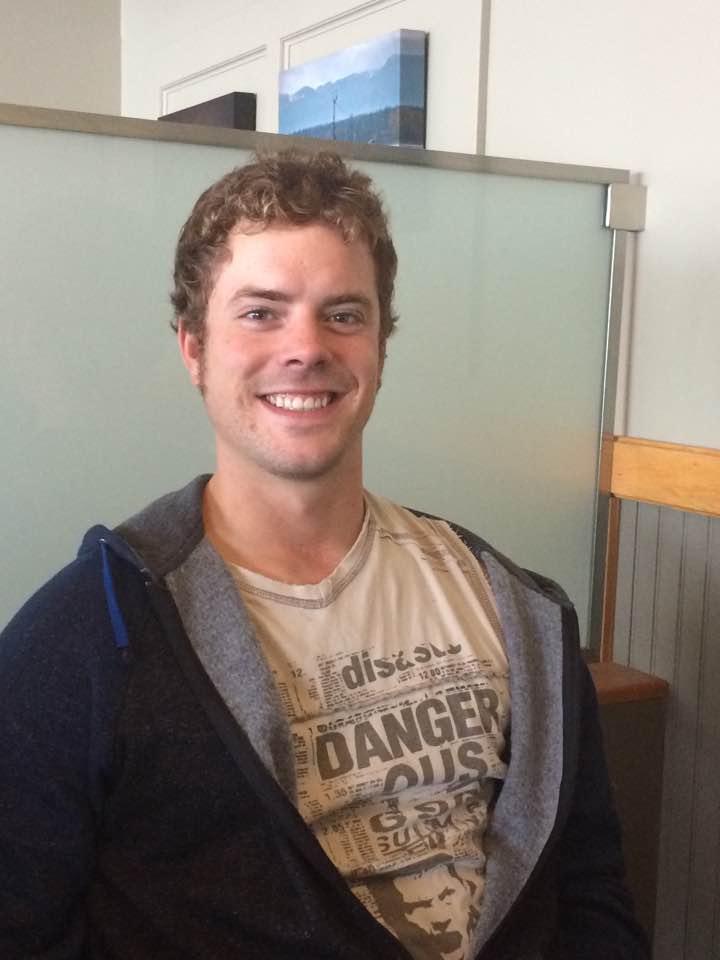
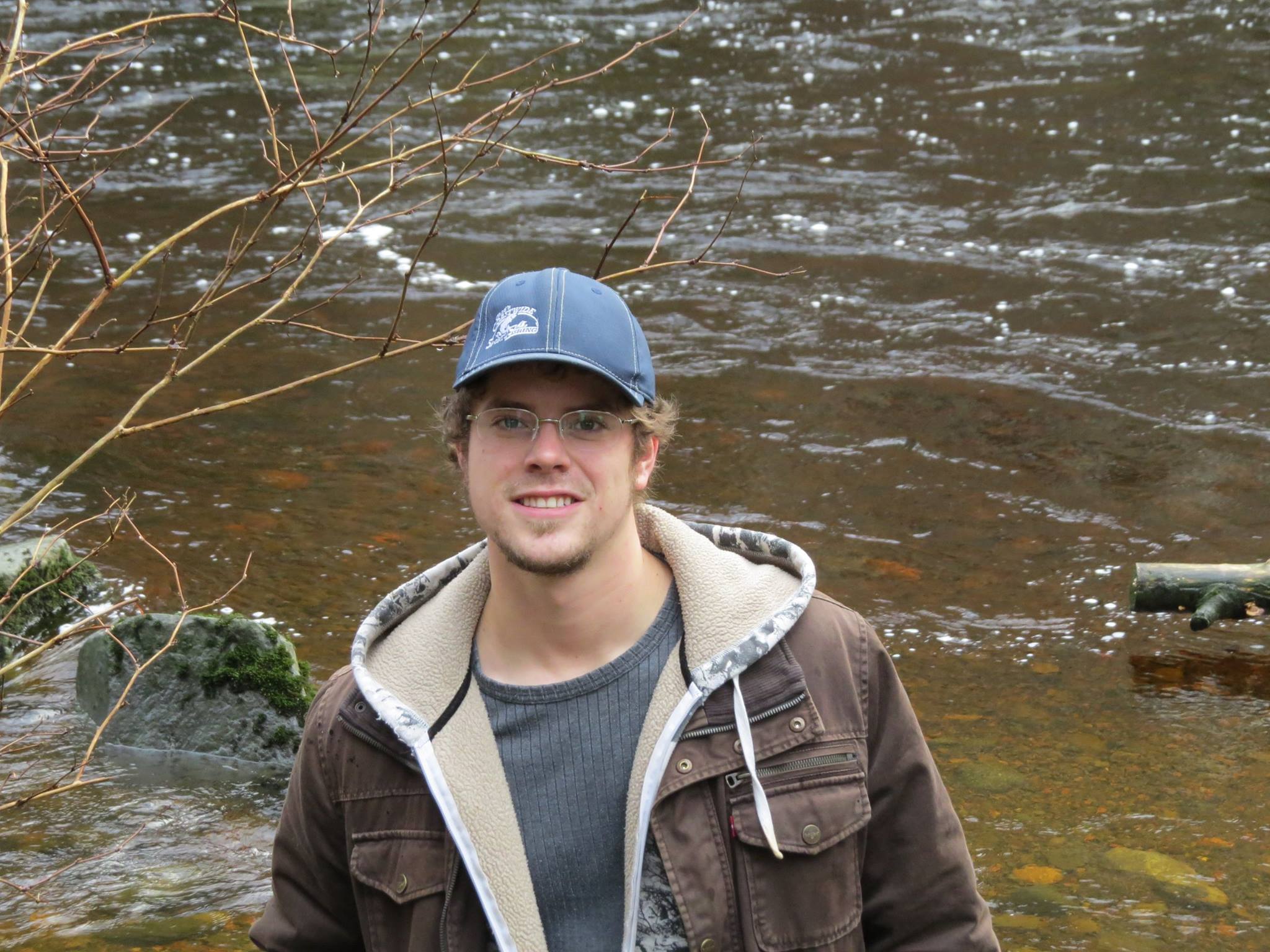
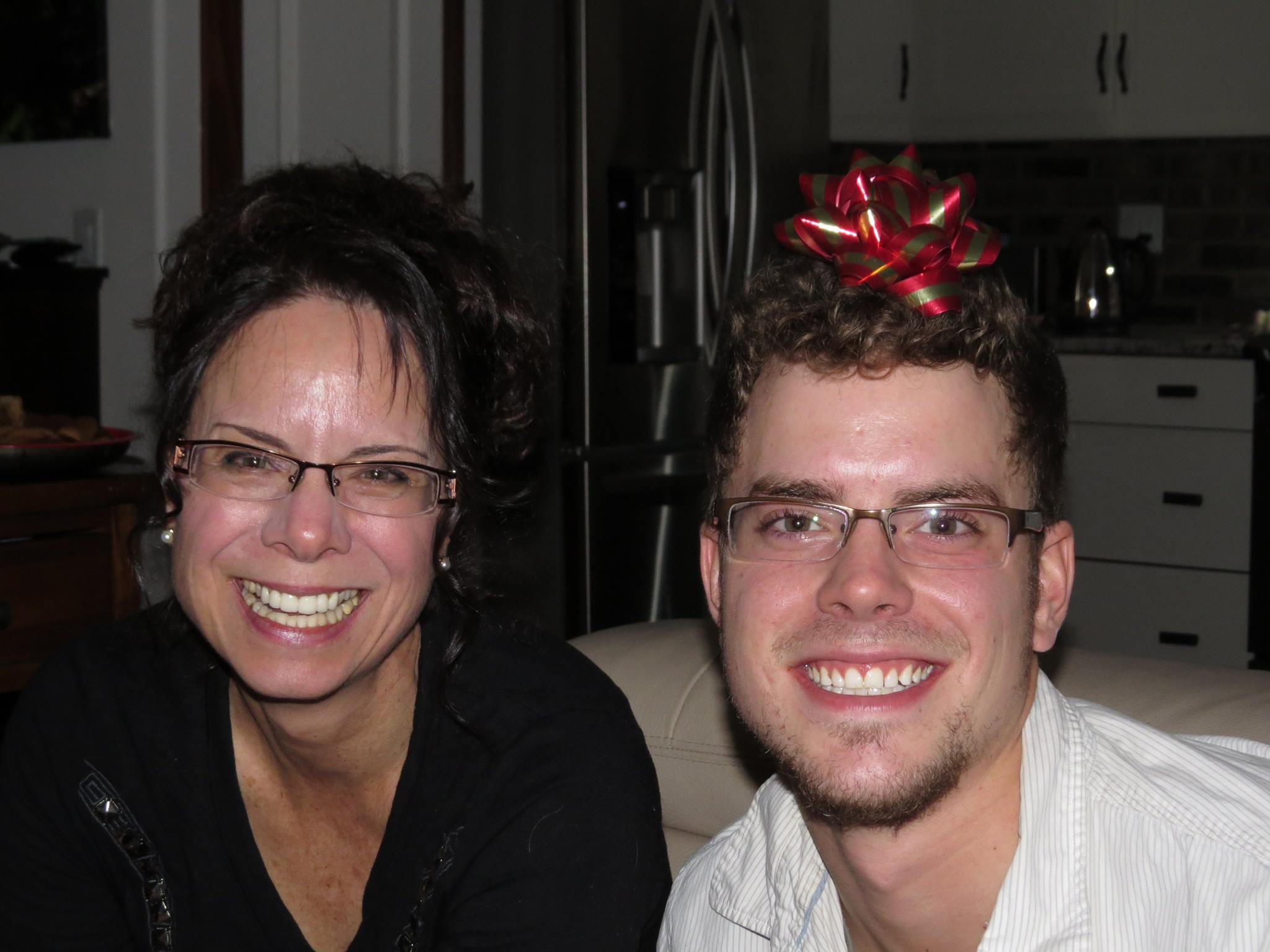
My son, Spencer, died by suicide on February 26, 2024, at the age of 32. As his mother, I have spent countless hours trying to understand how the bright, compassionate, intelligent little boy I raised became so consumed by addiction and mental illness. While there were many factors in Spencer’s life, I firmly believe that his long-term cannabis addiction played the main role in the devastating decline that ultimately took his life.
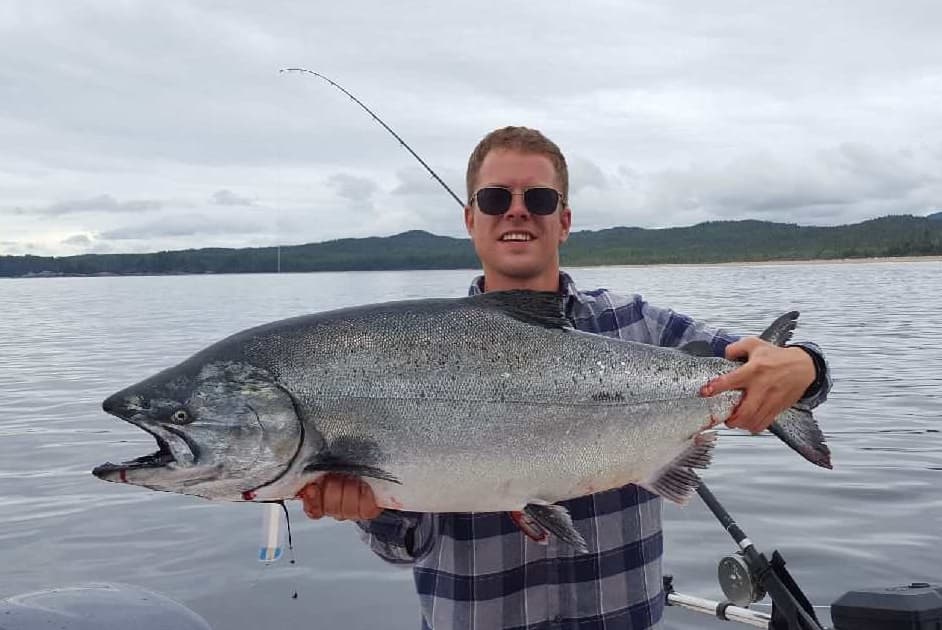
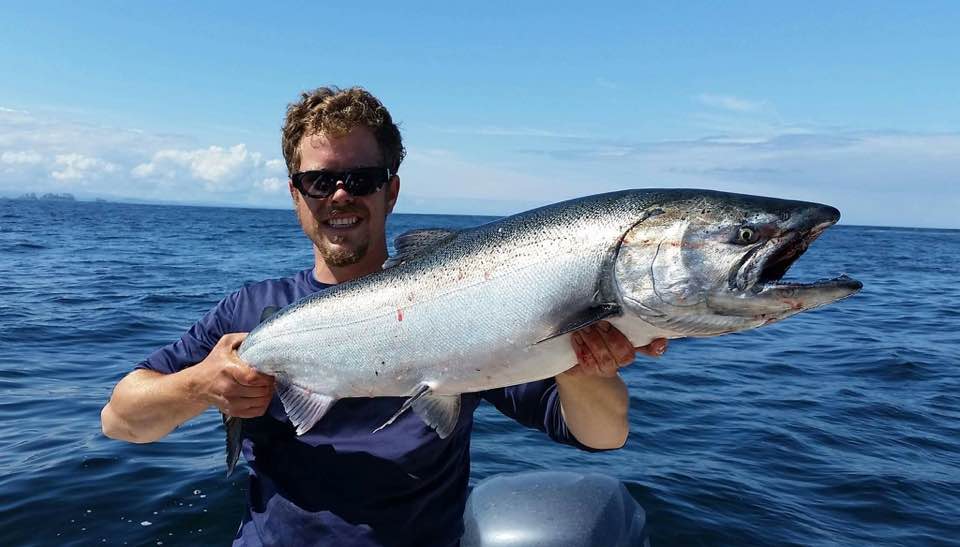
Spencer grew up in a loving and active family. From the time he was three or four years old, he accompanied his father and older brother on fishing and hunting trips throughout the mountains and foothills around Calgary. He especially loved fishing, and some of our happiest memories were made during family trips to Telegraph Cove on northern Vancouver Island.
As a teenager, Spencer became interested in bodybuilding, hockey, and football. It was during Grade 10, at approximately age 16, that he began smoking cannabis. He purchased it near his high school and hid his use from us. Looking back, I had no idea marijuana had entered his life, but I now believe it marked the beginning of a slow and devastating decline.
By the time Spencer graduated from high school, he was using cannabis regularly. Although he still achieved reasonably good grades, his addiction was becoming more established. When he entered Mount Royal University in Calgary, we began noticing significant changes. He struggled to attend classes, isolated himself in his dorm room, and developed what he described as social anxiety. He preferred being alone or spending time only with his girlfriend. Alarmed by these changes, his father and I repeatedly encouraged him to seek counseling for his cannabis addiction. However, as an adult, he insisted that his choices were his own, and there was little we could do.
Spencer had always been a high achiever. If he cared about something, he gave it everything he had. Yet during university, he became increasingly unmotivated and disengaged. His grades suffered, he lost interest in his studies, and despite being only six months away from graduation, he dropped out entirely. I believe his growing cannabis addiction profoundly affected his motivation, judgment, and decision-making abilities.
After leaving university, Spencer and his girlfriend moved to Port Hardy, British Columbia, hoping to build a life together. He found work as an ocean fishing guide, a job that seemed perfectly suited to his lifelong passion for fishing. However, his cannabis use continued to escalate. He was eventually fired from his first guiding position because of excessive cannabis use. Rather than accepting responsibility, he became angry at the company and showed little remorse. It was during this period that we realized he was losing the values and sense of accountability that had always defined his character.
At the same time, Spencer began growing his own cannabis. Over the next several years, his use increased dramatically. Although he managed to find another guiding position and worked for several seasons, we watched as his ability to function steadily declined. He frequently complained that he struggled to multitask, manage clients, and safely perform his job. His long-term relationship deteriorated as his addiction worsened, eventually ending altogether. He also lost his job.
When his breakup and financial difficulties threatened his ability to keep his home, my husband and I purchased the house for him, placed it solely in his name, and paid off his debts. We desperately wanted to give him a fresh start. Looking back, I think we knew deep down that we were only delaying an outcome we were not yet ready to face.
Following the breakup, Spencer became increasingly isolated. He withdrew from family and friends and spent countless hours online. He became consumed by conspiracy theories, including QAnon, flat-earth beliefs, parasites, and extraterrestrial entities. His beliefs grew more extreme with time, and he became convinced that his research gave him special knowledge and insight that others lacked. The compassionate, thoughtful son I had known became increasingly arrogant, intolerant, angry, and verbally aggressive. Cannabis remained at the center of his life, and he later told me he was consuming as much as 800 milligrams of pure THC per day.
By 2022, his mental state had deteriorated dramatically.
In March of that year, Spencer called us screaming and crying. He believed aliens were going to kill him. He told us they wanted him to kill his two nieces and that he was going crazy. We wanted to call an ambulance, but he begged us to come help him instead. When we arrived after a four-hour drive, he was extremely high and laughing at our concern. Over the following weeks, a frightening cycle developed. Spencer would enter a state of crisis, we would bring him to our home, attempt to get him medical help, and then he would refuse treatment and return home. Days later, the cycle would repeat.
We drove him to the hospital multiple times, begging him to seek help. Each time he refused to enter the emergency department. At home, he made alarming statements, including telling me that he was asking “the Grays” not to hurt me because they disliked my efforts to get him help. My husband and I became frightened enough that we locked our bedroom door at night because we worried he might harm us if commanded to do so by the voices or entities he believed were communicating with him.
The crisis finally reached a breaking point when Spencer called again, screaming that the aliens were telling him to kill himself and that he needed immediate help. We called 911. Police and EMS transported him to Port Hardy Hospital, where he was diagnosed with a psychotic break and placed under British Columbia’s Mental Health Care Act.
Even then, the situation remained chaotic. Spencer left the hospital against medical orders while awaiting transfer to a psychiatric unit and evaded police for two days. After he eventually arrived at our home, the RCMP located him and transported him to Nanaimo Hospital. He was then transferred to the psychiatric unit in Comox.
While hospitalized, staff attempted to stabilize him with psychiatric medications. However, he secretly cheeked his medications for two weeks, and blood tests later confirmed he was not taking them. During day passes from the psychiatric unit, he obtained cannabis and continued using it. His psychiatrists explicitly warned us that cannabis was contraindicated with the medications he was being prescribed and that if he continued smoking, his condition would likely worsen. Unfortunately, Spencer refused to accept this advice. He minimized his cannabis use, was dishonest during counseling sessions, and refused to stop. His addiction had become stronger than his willingness to accept treatment.
After being discharged, Spencer returned home and resumed growing cannabis and smoking throughout the day and night. He became increasingly isolated, hostile, and emotionally unstable. Because he was still under the Mental Health Care Act, he was assigned a psychiatric nurse, but he refused to allow healthcare providers to share information with our family. Communication became increasingly difficult. He demanded money, became entitled and verbally abusive when we refused, and eventually cut us almost entirely out of his life.
The stress of watching Spencer deteriorate was overwhelming. My husband and I eventually moved back to Calgary. Shortly afterward, I suffered a heart attack. Doctors could not determine a clear physical cause and ultimately believed it may have been Takotsubo cardiomyopathy—commonly known as “broken-heart syndrome.” I truly believe that watching my son suffer contributed to that outcome.
By 2024, Spencer was almost completely isolated except for occasional contact with his nurse. His hygiene was poor, he was not eating properly, and he repeatedly threatened suicide. Each time, I alerted his care team because I feared he was becoming increasingly dangerous to himself. Despite these warnings, he was never re-admitted to psychiatric care.
On the morning of February 26, 2024, Spencer intentionally took fentanyl and ended his life. He was only 32 years old.
After his death, I finally spoke with one of his nurses, who told me that Spencer had been diagnosed with schizophrenia as well as an extremely severe form of narcissistic personality disorder. Staff believed there were almost “two Spencers” within his personality. Hearing this was devastating. It helped explain the severity of the mental illness he had been fighting, but it also deepened my grief because I realized just how much suffering he had endured.
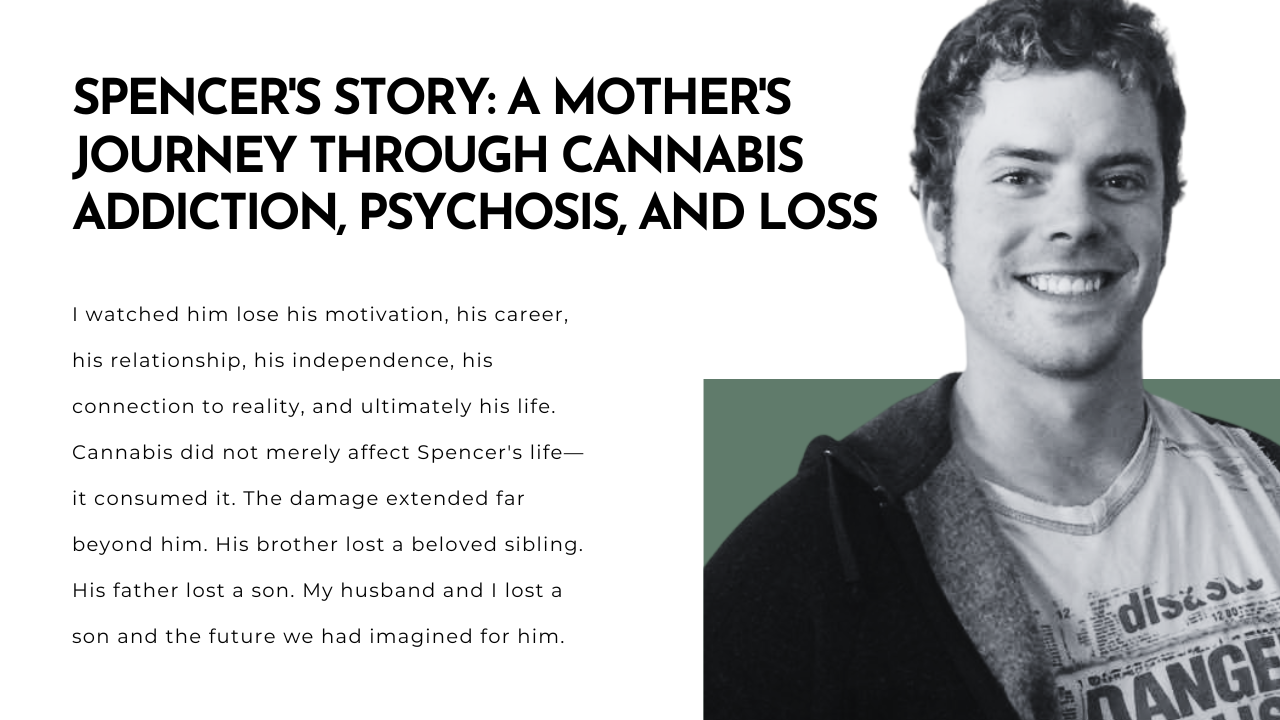
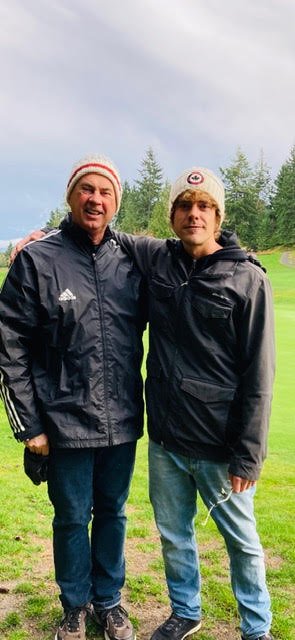
The only thing I ever wanted for my son was for him to find peace. Instead, I watched him lose his motivation, his career, his relationship, his independence, his connection to reality, and ultimately his life. Cannabis did not merely affect Spencer’s life—it consumed it. The damage extended far beyond him. His brother lost a beloved sibling. His father lost a son. My husband and I lost a son and the future we had imagined for him.
I share Spencer’s story because I hope it may help another family recognize the warning signs before it is too late. I do not claim to have all the answers. I only know what I witnessed as a mother: a kind, intelligent, empathetic young man whose life gradually unraveled under the weight of severe cannabis addiction and mental illness. I miss him every day, but I take comfort in believing that he is finally at peace and no longer suffering.
Petra Taylor
Spencer’s Mother
Petra,
I am so sorry for your loss and for all the struggles over the years. My 25 year old son began smoking marijuana around age 14 and unfortunately it led into meth and Xanax abuse. He has been in treatment several times and is currently there now. I am trying to remain hopeful but also cautious.
Your son seemed like an amazing young man! I pray that you and your husband may find some peace and joy in your lives.
Hi Sheryl,
Thank you so much for your kind words. I am very sorry to hear of your son’s addiction, but am also very hopeful for you that with the help of treatment and the loving support that you have been giving to him, he will once again be able to experience joy and peace in life. I wish Spence had listened to us regarding his addiction, but his firm belief that cannabis was strictly a natural, organic medicine fuelled his addiction and in his mind, justified his extreme use of cannabis.
I wish you all the very best with your son, and I truly hope that your life will continue on a positive trajectory with him. All we want for our children is for them to have peace, love, and fulfillment in their life.
Thank you for reaching out.
Big hugs.
Petra